Nettrux
Turning Freight Expansion Into a Scalable Growth System
Overview
As a technology-driven freight brokerage and third-party logistics provider (3PL), Nettrux aimed to expand its operations beyond its localized presence in California to capture a portion of the high-volume domestic shipping market.
Role
As Lead Marketing Manager, Maksim engineered a data-driven Growth Strategy that established clear market-entry priorities across high-yield freight corridors, segmented top-tier B2B shippers, and deployed a self-serve portal acquisition model.
LEAD MARKETING MANAGER · PROJECT MANAGEMENT
Problem
Nettrux had a well-defined expansion strategy and prioritized enterprise shippers, but its web infrastructure was unable to accommodate the demands of multi-state logistics. This disparity resulted in an unoptimized digital footprint for high-volume freight keywords, which hindered customer acquisition and impeded the platform’s scalability and customer conversion.
Solution
Translated the growth objective into four connected workstreams:
Step I: Corridor Mapping & Demand Prioritization
Maksim analyzed competitive domestic freight lanes and multi-carrier capacity constraints across core shipping corridors to isolate exactly where Nettrux held a cost advantage. The analysis focused on real spot-rate drivers and operational visibility gaps to identify high-yield freight lanes ripe for market entry.
Step II: Intent-Driven B2B Shipper Segmentation
Rather than treating logistics procurement as a monolithic target, Maksim grouped prospective accounts by annual contract value (ACV), shipment frequency, and routing predictability. This stopped generic outbound waste by isolating high-volume shippers whose specific lane needs matched Nettrux's asset capacity.
Step III: Search-Led Conversion Architecture
Translated shipper behavior into a high-converting inbound engine by re-engineering Nettrux's digital infrastructure around high-intent freight-lane keyword clusters. This replaced generic marketing copy with programmatic routes built for instant freight quotes, turning organic search visibility into active customer acquisition.
Step IV: Growth Measurement
Deployed an enterprise measurement framework to map top-of-funnel customer acquisition costs (CAC) directly against active portal sign-ups and lane-specific lifetime value (LTV). This matrix removed tracking ambiguity, giving the executive team real-time visibility into channel margins and regional expansion ROI.
Outcome
The final strategy turned Nettrux’s expansion objective into an actionable growth framework connecting market opportunity, customer priorities, positioning, acquisition, and performance measurement.

Part 2: SEO-Led Website Architecture
Overview
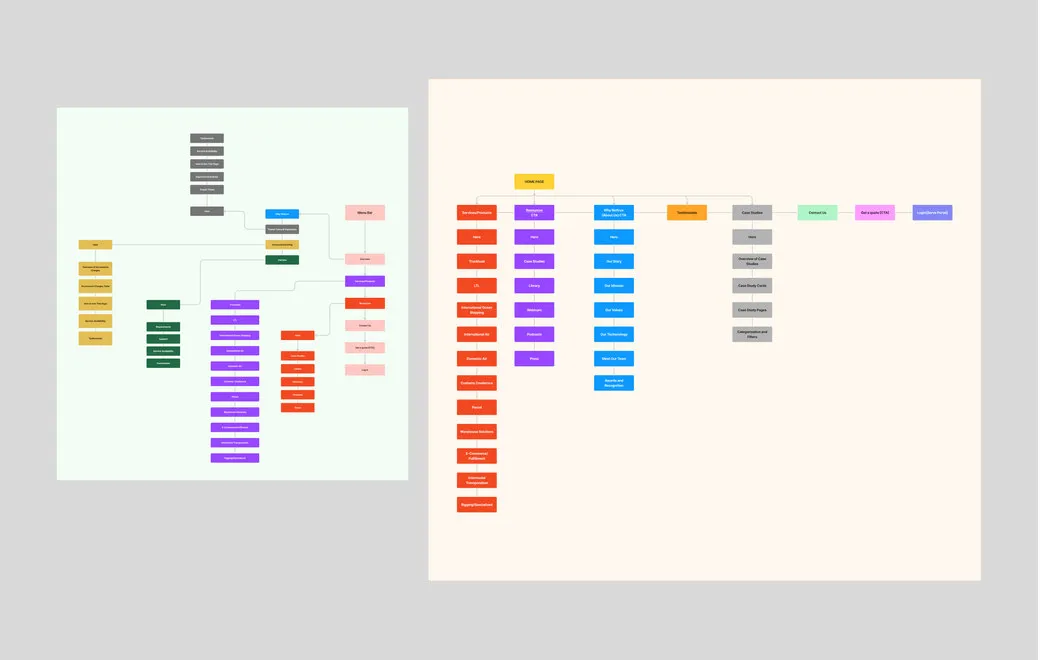
The strategy outlined the growth objectives, target audience, and competitive positioning for Nettrux. However, the existing website structure did not align with this growth model.
Consequently, Maksim translated the strategy into a search-driven acquisition architecture centered around customer intent and conversion.
Objective
Transformation of Nettrux’s website from a rudimentary digital presence into a scalable acquisition platform that seamlessly integrates search demand, paid acquisition, content, email marketing, and conversion-oriented landing pages.
Solution
Step I: Search Demand & SEO Audit
Audited the existing digital infrastructure, mapping real B2B customer search behaviors against competitive freight and logistics query volumes. This diagnostic pass stripped out internal corporate corporate structure biases, using raw customer demand and corridor-specific search intent as the factual foundation for the platform's new visibility model.
Step II: Acquisition Architecture Engineering
Re-engineered the website architecture around high-value service categories, search-engine optimization opportunities, and bottom-of-funnel customer acquisition pathways. This simplified multi-market user navigation while building dedicated, high-intent landing page networks that bridged the gap between freight discovery and commercial sales velocity.
Step III: Intent-Mapped Content Pipelines
Mapped out content asset distribution across the entire enterprise customer journey, deploying optimized service layers, interactive freight tools, and targeted resources. Every distinct page was assigned a specific revenue-driven role, capturing programmatic lane traffic, addressing procurement friction points, and funneling qualified traffic into the conversion pipeline.
Step IV: Structural Search Authority Optimization
Built a performance-driven optimization framework that standardized server-rendered metadata, crawlable semantic structures, asset compression, and internal link equity distribution. This gave high-converting landing assets the baseline authority and crawl efficiency required to rank competitively for hyper-lucrative, high-intent commercial keywords.